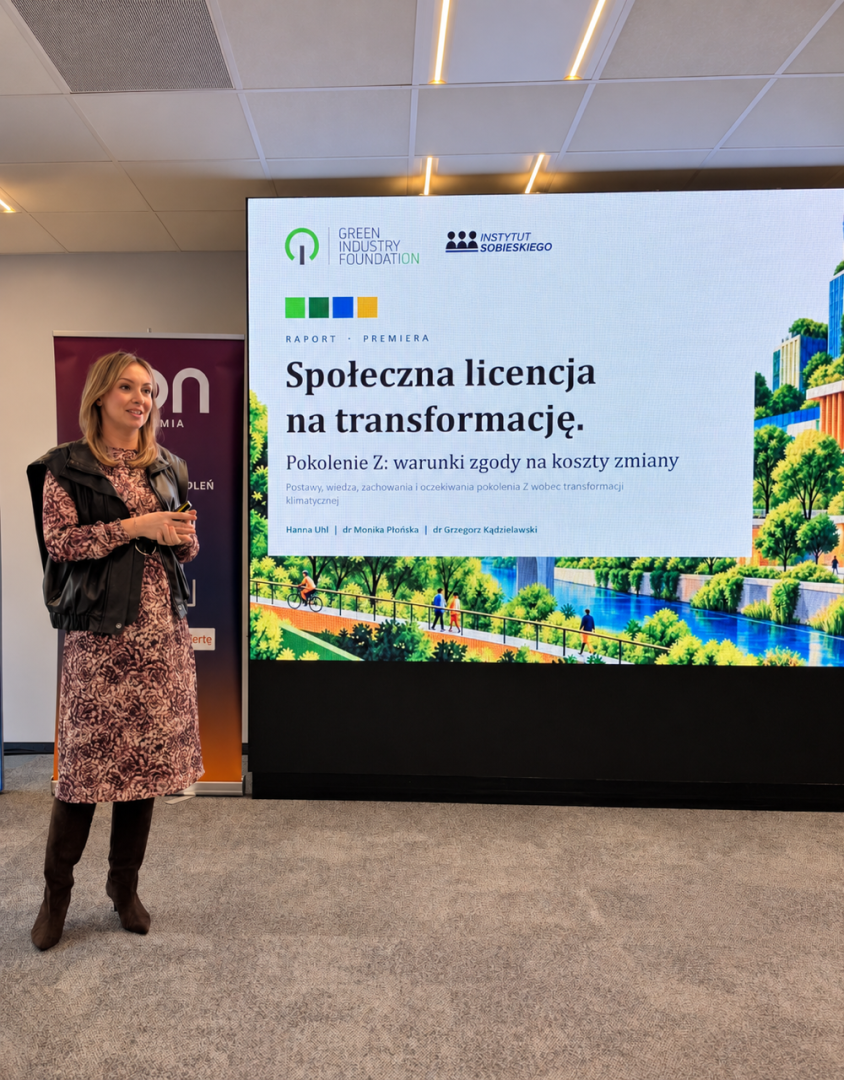
We asked young people not whether they support the transition, but under what conditions they would be willing to bear its costs. The report combines a CATI survey of 561 people with three focus group interviews conducted between February and May 2026.
Stability first
In 10 years, young people most want to have financial stability and not have to worry about the cost of living (66%) and to be healthy (64%). Clean air and nature were indicated by 13% of respondents. However, this does not mean indifference. When describing their ideal day, almost all interview participants spontaneously mentioned greenery, clean air and the absence of concrete. For them, the environment is part of a good life rather than an abstract “climate”.
Technology unites, coercion divides
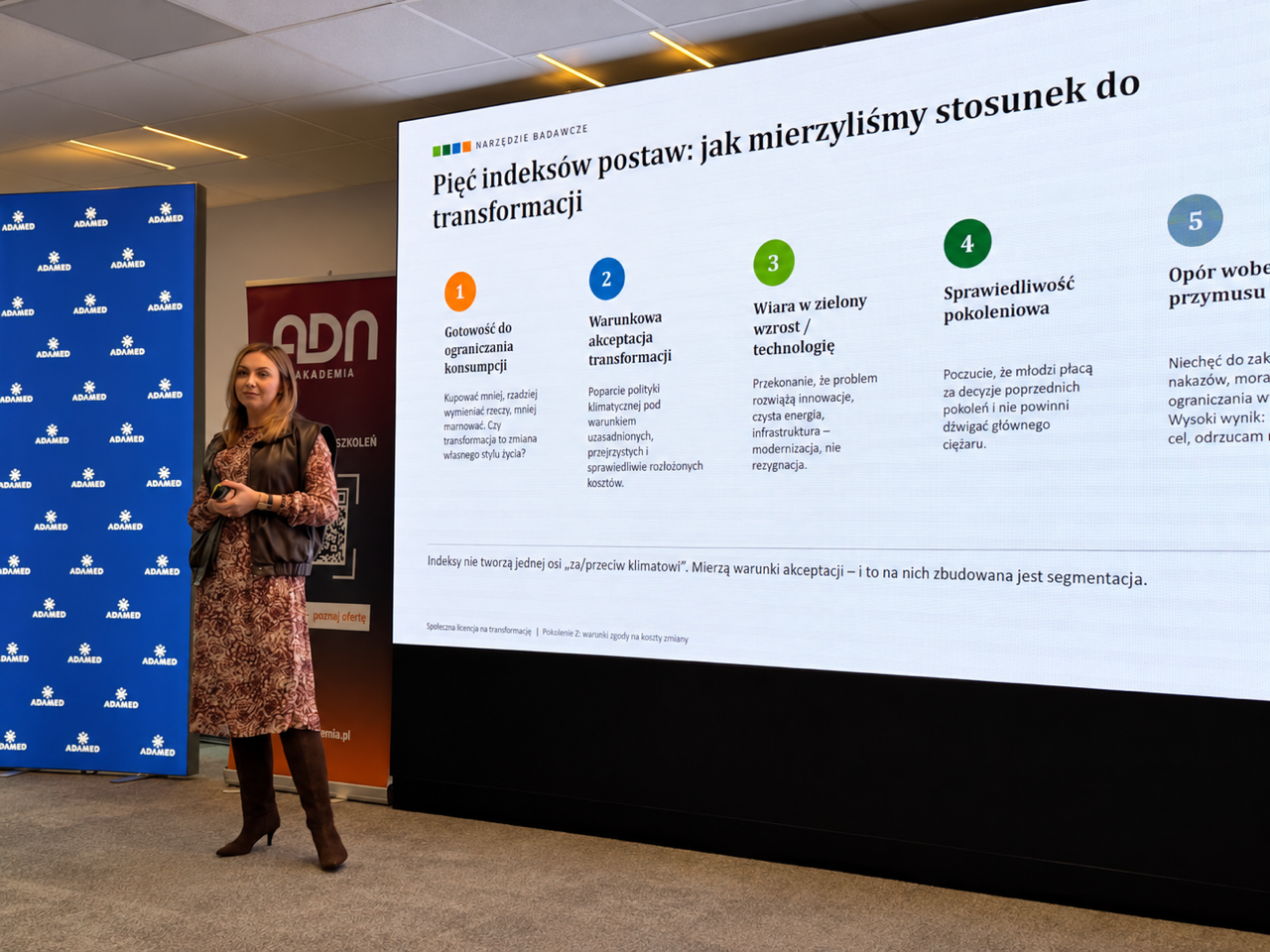
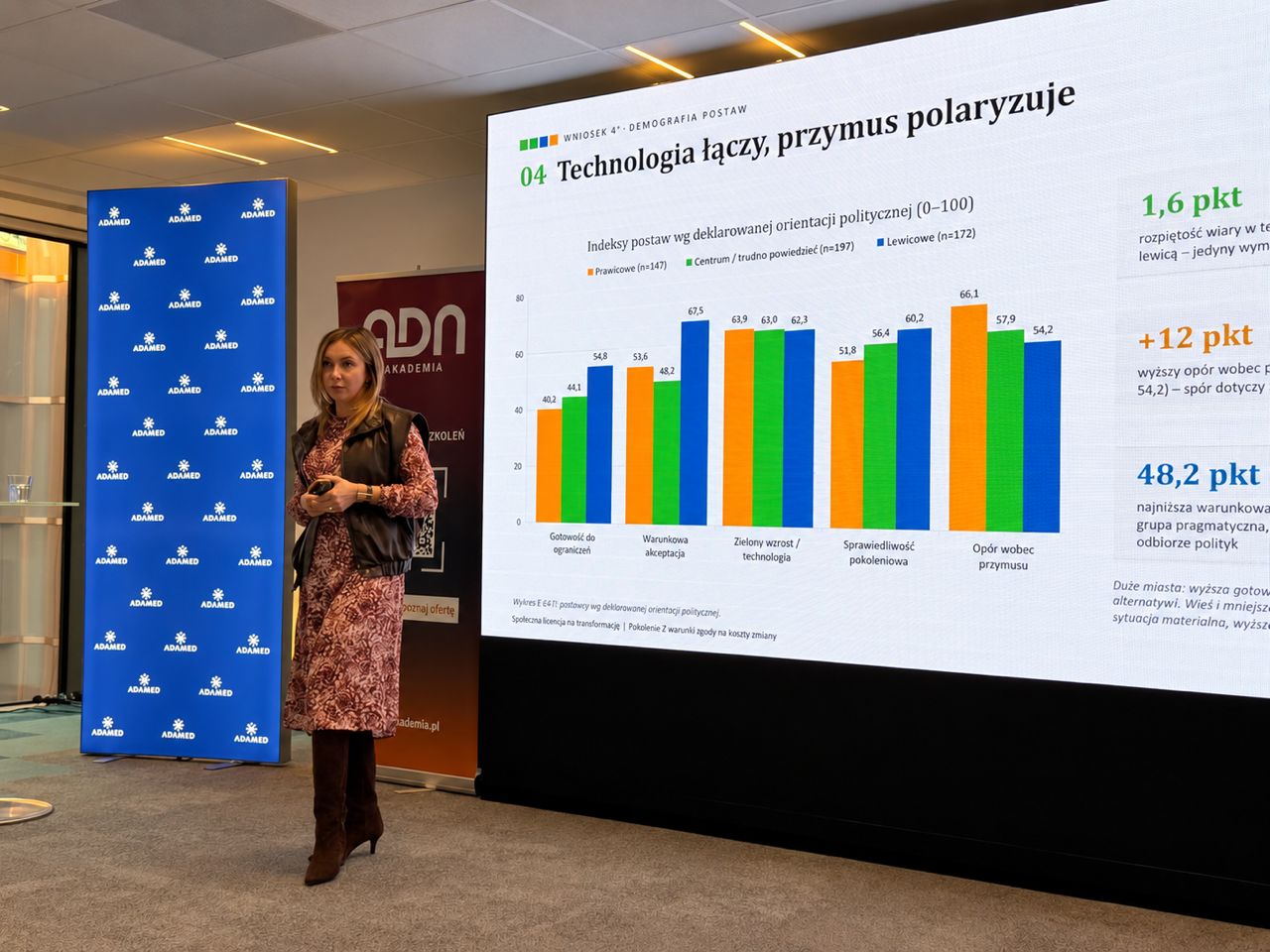
The strongest attitude is belief in green modernisation and technology (62.9 points out of 100), while the weakest is willingness to reduce personal consumption (46.0 points). Belief in technology practically does not divide young people politically. Coercion does: 29.4% of respondents declare strong resistance to bans and moralising, while only 3.4% declare low resistance.
Fairness as a condition
66% of respondents believe that large companies should be the first to reduce their impact on the climate. In one of the attitude groups, 77% strongly reject the costs of climate policy if ordinary people are expected to pay while large companies are not. In the “Climate Contract 2035” simulation, no one chose giving up their car, more expensive energy or higher bills without compensation.
“Young Poles are not opponents of the transition. They are its most demanding reviewers. They accept the goal, but assess how it is achieved: whether the change improves quality of life, whether there are real alternatives and whether the costs are distributed fairly. If we communicate the transition through the language of bans and sacrifices, we lose this generation. If we communicate it through the language of modernisation, lower bills and proportionate responsibility of the largest emitters, we gain their support,” says Dr Monika Płońska, President of the Management Board of the Green Industry Foundation and co-author of the report.
Five directions for action
In the report, we formulate recommendations for public administration, businesses, schools, non-governmental organisations and the media:
-
Communicate benefits, not sacrifices.
-
Be clear about who bears the costs.
-
Strengthen climate education in schools.
-
First provide an alternative, then introduce regulations.
-
Build trust through transparency in how climate funds are spent.
The authors of the report are Hanna Uhl, Dr Monika Płońska and Dr Grzegorz Kądzielawski.